
SEVENTH ORDER

SEVENTH ORDER
To develop and to implement an comprehensive action plan that enables the recovery of traditional forms of substance and feeding, within the concept of Ethno-development, that generates food security and sovereignty.
Liable entities: Ministry of Agriculture, Ministry of interior and Ministry of Finance, National Department of Planning, Social Prosperity Department, Governorates, and Municipality authorities.
THE ATRATO IS LIFE
TIMELINE
Convention 1299 of 2019
Signed between the Ministry of Interior- IIAP (Instituto de Investigaciones Ambientales del Pacífico) for the formulation of PAO7.
Convention 1299 of 2019 revision
Meeting between CCGA and IIAP to review the agreement and point out that it does not comply with the standards of the judgment on participation.
Municipal roundtables
Municipal roundtables led by IIAP to collect inputs for PAO7.
First draft PAO7
Provided by IIAP.
Subregional roundtables
One was developed for each watershed (upper, middle, and lower) for presentation of the ODP7 proposal to delegates from each municipality.
PAO7 presentation
By the IIAP.
PAO7 Revision
Meeting between CCGA and the Ministry of Agriculture on PAO7 participation deficiencies and the lack of involvement of the Ministry of Agriculture. Technical roundtables led by the Ministry and participation route are defined. It is agreed that a new agreement will contribute to the 3 pilot projects of PAO7.
Convention No. 20210526
Signed between the Ministry of Agriculture and IIAP for the conclusion, validation, and approval of the PAO7.
Municipal roundtables
Implementation of roundtables in each of the 15 municipalities involved to review and adjust the PAO7 proposal.
Interinstitutional roundtables
Working spaces between entities responsible for the order and guardians to review each of the PAO7 lines.
Approval and notarization of PAO7
In the framework of the XIV Session of the Commission of Guardians.
Convention MADR-PNUD 20220692
The international cooperation convention No. 20220692 between the MADR and the United Nations Program-UNDP has the objective of developing protocols for seed production and conservation. The convention was prioritized and socialized with the community councils ASCOBA, COCOMACIA, COCOMOPOCA.
Interadministrative Agreement 457 between MADR and IIAP
The Interadministrative Agreement between the MADR and the IIAP promoted productive initiatives in the Atrato River watershed to strengthen the capacities of ethnic and farmer communities, in compliance with the judgment. Due to factors such as climate and the armed conflict, the agreement was extended and advanced in three phases: characterization, structuring of productive projects and their financing.

Invited columnists: Viviana Gonzáles and Rodrigo Rogelis, members of the Centro Sociojurídico para la Defensa Territorial Siembra, legal attorneys of the petitioners of the judgment T-622 of the Atrato River.
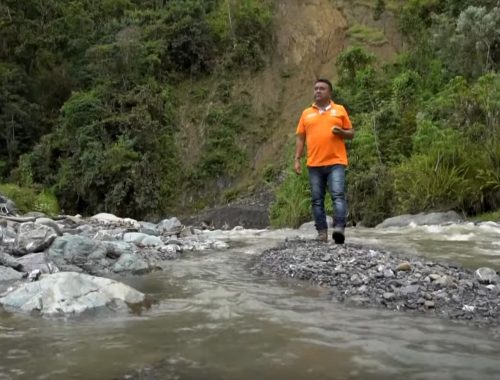
In order to guarantee the protection and decontamination of the Atrato River, in Chocó, Colombia, the judges of the Constitutional Court declared it a “subject of right”. Six years after the judgment, there is still a lot to do. This is a collective work with the journalist Marie Eve Detoeuf, from “Le Monde”.

The Guardians of Atrato, along with the Centro Sociojurídico Siembra, will submit next Thursday, November 3rd, a petition to the Constitutional Court for the fifth anniversary of the Judgment T-622, the first to acknowledge a River a subject of rights. In the text, the status of the implementation of the judgment is identified, and even though it has progressed, it has not been fully fulfilled.
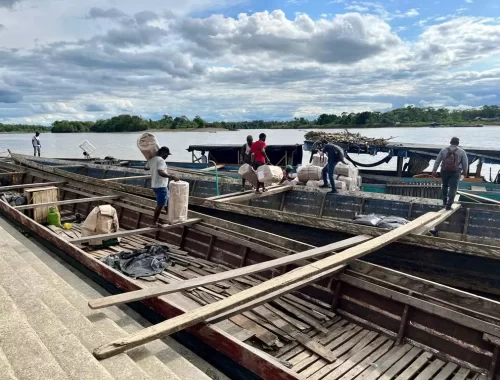
“The judgment T-622 of the Constitutional Court? Everybody here knows it”, says José Adán Palacios, while he charges his boat on the pier of Quibdó. José Adán, who is from Bojayá, transports passengers and merchandise, and knows better than anyone this majestic River and its watersheds. “But the judgment has not changed a thing; the contamination carries on, whether it is due to the mining, deforestation, or trash”, the boatman sighs.